Peptide integrity begins long before any experiment starts. How researchers handle, store, and manage their compounds directly determines the reliability of every result they generate. Poor storage practices silently degrade compound purity, introduce contamination, and invalidate months of careful experimental work. Understanding how to store peptides correctly is therefore not optional for serious laboratory investigators. It represents a fundamental competency that every research team must master before working with sensitive compounds. This guide covers every critical aspect of peptide storage from delivery through active experimental use. Whether your lab works with lyophilized powders or reconstituted solutions, this resource addresses your specific storage needs comprehensively. All peptides referenced throughout this article are supplied by Molar Peptides strictly for laboratory and scientific research purposes only. No information here constitutes medical advice or encourages human use of any compound discussed.
Why Proper Peptide Storage Matters
Peptides are chemically sensitive molecules that degrade when exposed to heat, light, moisture, and microbial contamination. Even minor storage errors can alter a compound’s molecular structure in ways that produce false or misleading experimental data. Researchers who invest significantly in premium research compounds cannot afford to compromise them through avoidable handling mistakes. Furthermore, degraded peptides do not simply produce weaker results — they can produce entirely misleading ones. A contaminated or degraded compound may behave differently at the receptor level, skewing data that informs future research decisions. NIH storage guidelines for biological compounds consistently emphasize temperature control and contamination prevention as primary integrity factors. Proper storage also maximizes peptide shelf life, protecting your procurement investment and ensuring consistent availability throughout multi-phase studies. Every decision made between delivery and experimental use either preserves or compromises compound quality irreversibly.
Understanding Lyophilized Peptides
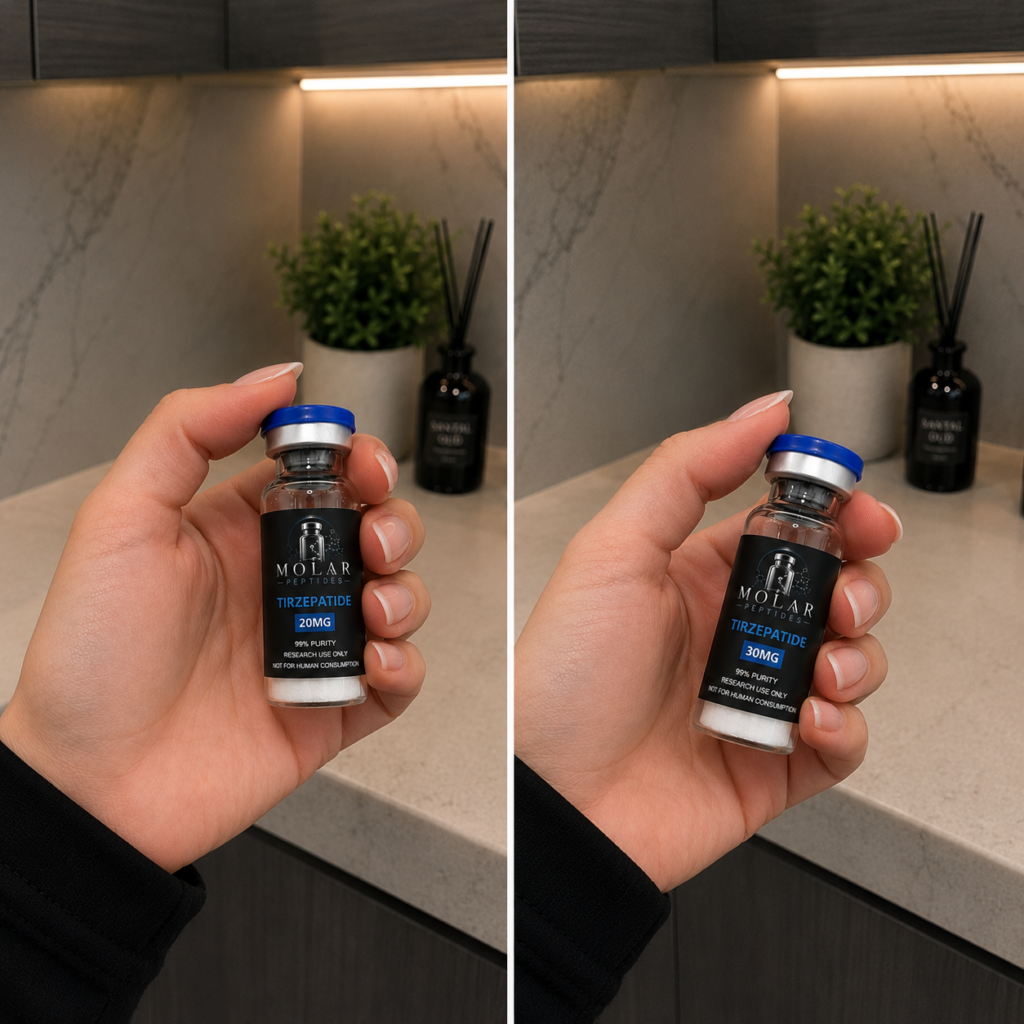
Most research peptides arrive in lyophilized form, meaning they have been freeze-dried into a stable powder state. This process removes water content from the compound, dramatically extending its stability under appropriate storage conditions. Lyophilized peptide storage is significantly more forgiving than managing reconstituted solutions, but it still requires careful attention. The absence of water reduces chemical reactivity and microbial growth potential, making lyophilized peptides inherently more stable. However, lyophilized peptides remain vulnerable to moisture reintroduction, excessive heat, and physical contamination during handling. Published research on PubMed documents how freeze-drying preserves peptide structural integrity when combined with appropriate ongoing storage practices. Understanding this foundation helps researchers make better decisions at every subsequent storage stage. Molar Peptides ships all compounds in lyophilized form with purpose-built packaging designed to maintain stability throughout international transit.
Storage Before Reconstitution
Short-Term Storage
Lyophilized peptides awaiting reconstitution within a few weeks tolerate refrigeration at 2–8°C without significant degradation. Keep vials sealed, dry, and away from direct light sources during short-term refrigerated storage periods. Always allow refrigerated vials to reach room temperature before opening to prevent moisture condensation inside the container. Condensation introduces water prematurely, potentially triggering degradation before reconstitution even begins.
Long-Term Storage
For storage extending beyond several weeks, freezing lyophilized peptides at -20°C preserves integrity most reliably. Compounds intended for long-term archiving benefit from storage at -80°C for maximum stability over extended periods. Label every vial clearly with compound name, concentration, date received, and storage date before placing in freezer. Organized labeling prevents handling errors and ensures proper stock rotation throughout your laboratory’s inventory management system.
Key Pre-Reconstitution Storage Tips
- Store vials upright to prevent stopper contact with powder
- Use desiccant pouches inside storage containers to control ambient moisture
- Never store peptides near volatile chemicals that could permeate vial seals
- Keep freezer temperature consistent and avoid units with frequent auto-defrost cycles
- Inspect vials upon delivery and document any packaging integrity concerns immediately
Storage After Reconstitution
Choosing the Right Reconstitution Solvent
Solvent selection directly affects both reconstitution quality and subsequent reconstituted peptide storage stability. Bacteriostatic water remains the most widely used reconstitution solvent in research settings for good reason. It contains 0.9% benzyl alcohol, which inhibits microbial growth and extends the usable life of reconstituted solutions. Sterile water works for immediate use but degrades faster and offers no antimicrobial protection during storage. Acetic acid solutions suit certain hydrophobic peptides that resist dissolution in aqueous solvents. Always consult compound-specific documentation before selecting a reconstitution solvent for any research peptide.
Post-Reconstitution Handling
Once reconstituted, peptide solutions require refrigeration at 4°C and should be used within recommended timeframes. Most reconstituted research peptides maintain acceptable stability for two to four weeks under proper refrigerated conditions. However, this window varies significantly between compounds based on their specific molecular characteristics and sensitivity profiles. Avoid repeated withdrawal from the same vial when possible, as each entry introduces contamination risk. Use sterile syringes and needles for every withdrawal to maintain aseptic conditions throughout the solution’s usable life.
Temperature Guidelines for Research Peptides
Temperature management represents the single most critical variable in successful peptide storage across all compound types. The following table summarizes recommended storage temperatures for common research scenarios:
| Storage Scenario | Recommended Temperature | Typical Duration |
|---|---|---|
| Short-term lyophilized | 2–8°C (refrigerator) | Up to 4 weeks |
| Long-term lyophilized | -20°C (freezer) | Up to 12 months |
| Extended archival storage | -80°C (ultra-low freezer) | 12+ months |
| Reconstituted solutions | 4°C (refrigerator) | 2–4 weeks |
| Transit/shipping | Cold-chain (2–8°C) | Duration of transit |
Temperature fluctuations cause peptide bonds to stress and break, accelerating degradation even within normally acceptable storage ranges. Therefore, consistent temperature maintenance matters as much as the target temperature itself. Avoid storing peptides in refrigerator door compartments, where temperatures fluctuate with every opening cycle. Dedicated laboratory refrigeration units with stable internal temperatures and reliable monitoring systems provide optimal peptide storage conditions.
Light Protection in Peptide Storage
Light exposure, particularly ultraviolet radiation, triggers photodegradation in many peptide compounds. This degradation pathway operates independently of temperature, meaning refrigerated peptides still degrade when exposed to light consistently. Amber vials offer the first line of defense, filtering out UV wavelengths most damaging to sensitive molecular structures. When amber vials are unavailable, wrapping standard vials in aluminum foil provides effective light blocking during storage. Store peptide containers inside opaque boxes or drawers rather than leaving them exposed on open laboratory shelving. During reconstitution and handling, minimize direct light exposure by working efficiently and returning vials to protective storage promptly. FDA guidelines on pharmaceutical storage consistently identify light protection as an essential component of compound stability maintenance. Implementing systematic light protection protocols costs nothing but saves significant compound integrity over time.
Avoiding Contamination During Handling
Contamination represents one of the most common and preventable causes of research peptide degradation in active laboratories. Microbial contamination introduces biological material that accelerates compound breakdown and compromises experimental validity entirely. Chemical contamination from solvents, cleaning agents, or other laboratory compounds can alter peptide molecular structure unpredictably. Physical contamination from particulate matter introduces unwanted variables that undermine research reproducibility across experimental runs.
Best Practices for Contamination Prevention
- Always work within a laminar flow hood or sterile environment when handling reconstituted peptides
- Use a fresh sterile needle and syringe for every vial entry without exception
- Swab vial stoppers with 70% isopropyl alcohol before every withdrawal
- Never return withdrawn solution to the original vial under any circumstances
- Wear appropriate personal protective equipment including gloves and eye protection
- Change gloves between handling different compounds to prevent cross-contamination
- Document every handling event with timestamps to support research reproducibility records
Understanding Peptide Shelf Life
Peptide shelf life varies considerably between compounds based on molecular complexity, amino acid composition, and storage conditions. Simpler peptides with fewer amino acid residues generally demonstrate greater stability across varying storage conditions. Longer, more complex peptides with disulfide bonds or unusual amino acid sequences require more careful management. The following factors most significantly influence how long any research peptide maintains its integrity:
- Temperature consistency: Fluctuations accelerate degradation faster than slightly elevated stable temperatures
- Moisture exposure: Even trace moisture contact with lyophilized powder initiates hydrolysis immediately
- Light exposure: UV radiation breaks specific peptide bonds regardless of temperature management
- Freeze-thaw cycles: Each cycle stresses molecular structure and cumulatively reduces compound integrity
- Solvent compatibility: Inappropriate reconstitution solvents can immediately begin degrading sensitive compounds
Research published in Nature on biomolecule stability consistently identifies freeze-thaw cycling as among the most damaging routine laboratory practices for peptide compounds. Aliquoting reconstituted solutions into single-use volumes eliminates freeze-thaw cycling entirely and represents a best practice for any frequently accessed compound. ScienceDirect hosts extensive literature on peptide stability optimization that research teams should consult when establishing compound-specific storage protocols.
Common Peptide Storage Mistakes to Avoid
Even experienced researchers make storage errors that silently compromise their compounds over time. Recognizing these common mistakes helps laboratories implement better practices before degradation occurs.
| Common Mistake | Why It Causes Problems | Better Practice |
|---|---|---|
| Storing in door compartments | Temperature fluctuates constantly | Use interior shelving only |
| Opening cold vials immediately | Moisture condensation forms inside | Allow to reach room temperature first |
| Reusing needles between withdrawals | Introduces microbial contamination | Use fresh sterile needles every time |
| Ignoring light exposure | UV degradation operates independently | Use amber vials and opaque storage |
| Skipping aliquoting | Repeated freeze-thaw degrades compound | Aliquot into single-use volumes |
| Poor labeling practices | Leads to handling errors and mix-ups | Label with full details at receipt |
| Storing near volatile chemicals | Chemical vapors permeate vial seals | Dedicated peptide storage area |
Frequently Asked Questions
1. How should I store lyophilized peptides when I receive them?
Refrigerate at 2–8°C for short-term storage up to four weeks. For longer storage, freeze at -20°C. Always allow vials to reach room temperature before opening to prevent condensation.
2. How long do reconstituted peptides last in the refrigerator?
Most reconstituted research peptides remain stable for two to four weeks at 4°C. Exact duration varies by compound. Always consult product documentation for compound-specific guidance.
3. What is the best solvent for reconstituting research peptides?
Bacteriostatic water suits most research peptides for short-to-medium-term use. Sterile water works for immediate use. Some hydrophobic peptides require dilute acetic acid. Check compound specifications before reconstituting.
4. Can I freeze reconstituted peptide solutions?
Generally, avoid freezing reconstituted solutions when possible. If freezing is necessary, aliquot into single-use volumes first to eliminate repeat freeze-thaw cycling that degrades compound integrity.
5. How do freeze-thaw cycles affect peptide quality?
Each freeze-thaw cycle stresses peptide molecular bonds and cumulatively reduces compound purity. Aliquoting into single-use volumes before freezing effectively eliminates this risk for most research applications.
6. Does light really damage peptides that significantly?
Yes. UV radiation triggers photodegradation in many peptide compounds regardless of temperature management. Always use amber vials or opaque protective wrapping and minimize light exposure during handling.
7. How do I store peptides like BPC-157 and TB-500 specifically?
Both compounds follow standard lyophilized storage protocols. Refrigerate short-term at 2–8°C and freeze long-term at -20°C. After reconstitution, refrigerate at 4°C and use within two to four weeks.
8. What storage approach works best for Semaglutide and Retatrutide peptides?
Both require consistent refrigeration at 2–8°C in lyophilized form. After reconstitution, maintain at 4°C and use within recommended timeframes. Aliquot to avoid freeze-thaw cycling if longer storage is needed.
9. How do I know if my peptide has degraded?
Visual indicators include cloudiness, discoloration, or visible particulate matter in reconstituted solutions. However, degradation often occurs without visible signs. Maintaining strict storage protocols from day one prevents invisible degradation.
10. Where can I find compound-specific storage protocols for research peptides?
Consult product documentation supplied with your compound, peer-reviewed literature on PubMed, NIH compound databases, and your supplier’s technical support team. Contact Molar Peptides directly for compound-specific guidance.
Conclusion
Mastering how to store peptides correctly separates laboratories that generate reliable data from those that unknowingly compromise their research integrity. Every stage of peptide management — from delivery through active experimental use — presents opportunities to either preserve or degrade compound quality. Lyophilized peptide storage demands attention to temperature consistency, moisture prevention, and light protection simultaneously. Reconstituted solutions require stricter management with shorter usable timeframes and rigorous contamination prevention protocols. Temperature guidelines, proper solvent selection, aliquoting strategies, and systematic labeling practices collectively determine how well any research compound performs throughout its usable life. Researchers who invest in understanding these principles protect both their compounds and the validity of their scientific contributions. All research peptides discussed throughout this guide are intended strictly for laboratory and scientific research purposes only. No content here represents medical advice or encourages human consumption of any compound.
Why Researchers Choose Molar Peptides
Molar Peptides understands that premium research compounds demand equally premium packaging and handling from source to delivery. Every compound in our catalog ships in purpose-built cold-chain packaging that maintains temperature integrity throughout international transit. Our lyophilized peptides arrive in sealed, clearly labeled vials with third-party certificates of analysis and complete batch documentation. We supply a comprehensive range of research peptides including BPC-157, TB-500, Semaglutide, and Retatrutide to verified research institutions worldwide. Our wholesale pricing makes consistent bulk access achievable without compromising the quality standards that serious research demands. Worldwide shipping capabilities mean laboratories across every major research region access our catalog with equal reliability and speed. Our dedicated support team assists with documentation, storage queries, compliance requirements, and custom bulk arrangements. Molar Peptides exists to serve one purpose: giving researchers the compound quality and supply reliability their work deserves. Contact our team today and establish a research peptide supply relationship built entirely on quality, consistency, and scientific integrity.