Scientific progress depends on reliable access to compounds that researchers can trust completely. Research peptides sit at the center of some of the most significant investigational work happening across global laboratories today. From metabolic biology and neuroscience to regenerative medicine and endocrinology, peptide compounds drive discovery across virtually every major research discipline. Yet the landscape of peptide procurement remains complex, inconsistent, and often confusing for research teams navigating it for the first time. This cornerstone guide addresses that gap directly. It covers what research peptides are, how they are manufactured, how researchers select and evaluate them, and what quality standards actually matter in practice. All compounds discussed throughout this article are supplied by Molar Peptides exclusively for laboratory and scientific research purposes only. Nothing in this guide constitutes medical advice or encourages human use of any compound described.
What Are Research Peptides?
Peptides are short chains of amino acids linked together by peptide bonds in specific sequences. Their length typically ranges from two amino acids up to approximately fifty, distinguishing them from larger protein molecules. Research peptides are synthetically manufactured versions of these compounds, designed for controlled scientific investigation in laboratory environments. Researchers use them to study biological pathways, receptor interactions, hormonal mechanisms, and cellular signaling processes in experimental models. Unlike pharmaceutical drugs intended for clinical use, research peptides exist strictly within scientific and investigational contexts. Their synthetic nature allows researchers to produce them consistently, modify their sequences precisely, and study specific biological effects in isolation. NIH databases document thousands of peptide compounds under active investigation across multiple scientific disciplines globally. The diversity of peptide structures enables an equally diverse range of research applications that continues expanding as synthesis technology improves.
How Research Peptides Are Manufactured
Solid-Phase Peptide Synthesis
The dominant manufacturing method for laboratory peptides today is solid-phase peptide synthesis, commonly abbreviated as SPPS. This technique builds amino acid chains sequentially on a solid resin support, adding one residue at a time in controlled chemical conditions. SPPS allows manufacturers to produce peptides with precise sequences, defined lengths, and consistent structural characteristics across production batches. Published research on PubMed extensively documents SPPS methodology improvements that have enhanced both yield quality and production consistency over recent decades.
Quality During Manufacturing
Manufacturing quality determines compound integrity long before storage or handling practices ever come into play. Reputable manufacturers implement rigorous in-process quality checks at every stage of the synthesis process. Crude peptide output undergoes purification through high-performance liquid chromatography to remove synthesis byproducts and impurities. Mass spectrometry analysis then confirms molecular weight and structural accuracy before any batch receives approval for distribution. The entire manufacturing chain, from raw amino acid selection through final lyophilization, determines whether a peptide arrives at your laboratory ready for reliable research use.
Types of Research Peptides
The peptide compounds available for laboratory research span several distinct functional categories, each addressing different investigational domains.
Metabolic and GLP-1 Peptides
Metabolic research peptides target hormonal pathways governing energy regulation, appetite signaling, and glucose metabolism. This category includes some of the most actively investigated compounds in contemporary scientific literature. Researchers studying obesity biology, insulin sensitivity, and energy homeostasis rely on these compounds extensively.
Growth Hormone Secretagogues
Growth hormone secretagogue peptides stimulate the natural release of growth hormone through pituitary and hypothalamic receptor pathways. They serve research programs examining tissue repair, body composition regulation, and hormonal signaling mechanisms in experimental models.
Neuropeptides
Neuropeptides influence brain chemistry, cognitive function, anxiety pathways, and neurological signaling processes. Research teams studying behavioral neuroscience, stress biology, and cognitive enhancement mechanisms frequently work with compounds from this category.
Regenerative and Repair Peptides
Regenerative peptides demonstrate investigational potential in wound healing, tissue repair, collagen synthesis, and anti-inflammatory pathway research. They attract significant attention from researchers studying skin biology, musculoskeletal repair, and cellular regeneration mechanisms.
Popular Research Peptides at Molar Peptides
Molar Peptides maintains a comprehensive catalog of high purity peptides across every major research category. The following compounds represent the most actively researched options currently available through our shop.
Metabolic Research Peptides:
- Retatrutide — Triple GLP-1, GIP, and glucagon receptor agonist for advanced metabolic research
- Tirzepatide — Dual GIP and GLP-1 receptor agonist with extensive published research literature
- Semaglutide — GLP-1 receptor agonist widely studied in metabolic and weight regulation research
Growth Hormone Peptides:
- CJC-1295 — GHRH analogue with extended half-life suited for long-duration growth hormone studies
- Ipamorelin — Selective growth hormone secretagogue with clean receptor binding profile
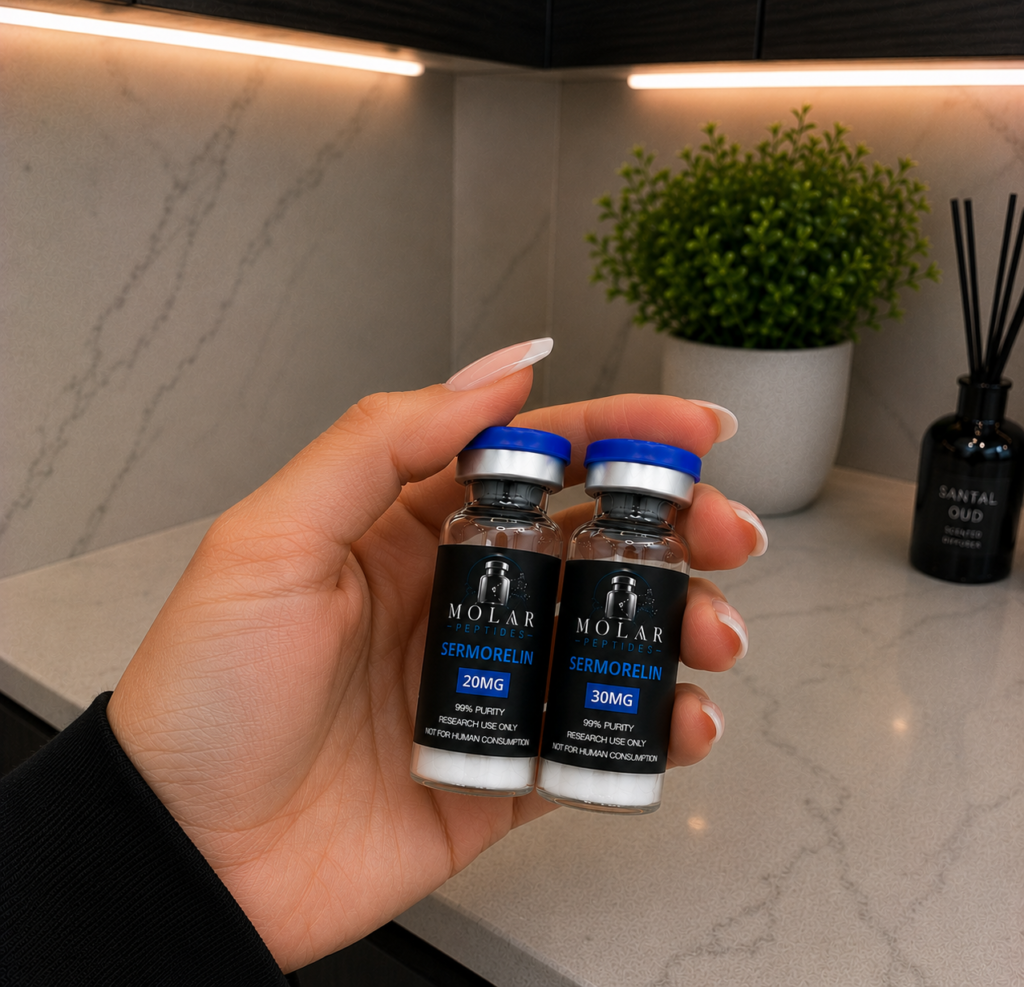
- Sermorelin — Endogenous GHRH analogue used in pituitary function and growth hormone research
Regenerative Peptides:
- BPC-157 — Studied extensively for tissue repair, wound healing, and anti-inflammatory pathway research
- TB-500 — Thymosin beta-4 fragment investigated for regenerative and cellular migration research
- GHK-Cu — Copper peptide researched for collagen synthesis, skin biology, and cellular regeneration
Neuropeptides:
- PT-141 — Melanocortin receptor peptide studied in behavioral and neurological research contexts
- Semax — Synthetic ACTH analogue investigated for neuroprotective and cognitive research applications
- Selank — Anxiolytic heptapeptide studied for stress biology and immune modulation research
All compounds listed above are intended strictly for laboratory and scientific research purposes only.
How Researchers Select the Right Peptides
Defining Research Objectives First
Effective peptide selection begins with clearly defined research questions rather than compound availability. Researchers who identify their target biological pathway first make dramatically better compound selection decisions. A team studying metabolic receptor biology selects differently from one examining tissue regeneration or neuroprotection.
Reviewing Existing Scientific Literature
Before selecting any compound, thorough literature review establishes what existing research has already documented. ScienceDirect and PubMed provide comprehensive access to peer-reviewed peptide research spanning decades of scientific investigation. Understanding existing evidence gaps helps research teams identify where their investigations can contribute most meaningfully to scientific knowledge.
Evaluating Compound Characteristics
Practical characteristics including half-life, solubility, receptor selectivity, and stability under laboratory conditions all influence compound selection. Some research designs require compounds with extended half-lives to support longer observation windows. Others prioritize highly selective receptor binding to isolate specific pathway effects without confounding multi-receptor interactions.
Quality Standards That Actually Matter
Not all research peptide suppliers apply equivalent quality standards, and the differences matter enormously for research integrity. Purity percentage represents the most fundamental quality metric for any research peptide. High-quality research compounds should demonstrate purity levels of 98% or higher as verified by independent third-party analysis. Anything below this threshold introduces impurities that can confound experimental results and compromise data reliability. FDA guidelines on analytical testing standards provide useful frameworks for understanding what rigorous quality verification actually requires. Beyond purity, researchers should evaluate batch-to-batch consistency, which determines whether compounds perform identically across multiple experimental phases. Supplier transparency regarding manufacturing origin, testing methodology, and documentation completeness signals genuine quality commitment versus marketing-only claims.
Purity Testing Methods Explained
High-Performance Liquid Chromatography
HPLC analysis separates peptide components by chemical properties and measures their relative concentrations with high precision. It provides the primary purity percentage figure that researchers use to evaluate compound quality. Reputable suppliers provide HPLC chromatograms with every batch, allowing researchers to verify purity data independently.
Mass Spectrometry
Mass spectrometry confirms molecular weight and structural identity of synthesized peptide compounds. It verifies that the compound matches its intended sequence rather than simply measuring overall purity percentage. Together, HPLC and mass spectrometry provide complementary verification that a compound is both pure and structurally correct.
Third-Party Laboratory Verification
Independent third-party testing provides the highest level of quality assurance because it removes supplier self-reporting bias entirely. Researchers should prioritize suppliers who routinely commission independent laboratory verification rather than relying exclusively on in-house quality testing. Molar Peptides provides third-party certificates of analysis with every order shipped to research institutions worldwide.
Storage and Handling Fundamentals
Proper storage preserves the high purity peptides your laboratory invests in and ensures experimental results remain scientifically valid. Lyophilized peptides maintain stability at -20°C for long-term storage and at 2–8°C for short-term use up to four weeks. Reconstituted solutions require refrigeration at 4°C and should be used within two to four weeks of preparation. Key storage principles every research team should implement consistently include:
- Allow refrigerated vials to reach room temperature before opening to prevent moisture condensation
- Use amber vials or opaque storage containers to protect compounds from UV light degradation
- Aliquot reconstituted solutions into single-use volumes to eliminate damaging freeze-thaw cycling
- Always use fresh sterile needles and syringes for every vial entry to prevent microbial contamination
- Label all vials with compound name, concentration, reconstitution date, and initials of handling researcher
- Store peptides away from volatile chemicals that could permeate vial seals during storage periods
- Maintain consistent freezer temperatures using dedicated laboratory units rather than general-purpose refrigerators
Nature’s published research on biomolecule stability consistently identifies temperature consistency and freeze-thaw cycling prevention as the two most impactful storage variables for peptide compound integrity.
Choosing a Trusted Research Peptide Supplier
What Separates Reliable Suppliers
The decision to buy research peptides online carries significant implications for research quality, compliance, and budget management. Reliable suppliers demonstrate transparency at every level of their operation without exception. They publish third-party testing results, provide complete batch documentation, and answer technical questions with specific rather than vague responses. Pricing transparency matters equally — legitimate wholesale peptide suppliers present clear pricing without hidden fees or ambiguous discount structures.
Red Flags to Watch For
Researchers should approach suppliers with caution when they observe the following warning signs:
- Purity claims without supporting third-party documentation
- No certificates of analysis available for review before purchase
- Vague or absent information about manufacturing origin and testing methodology
- Pressure tactics encouraging immediate purchase without time for due diligence
- No dedicated customer support for technical or compliance-related inquiries
Compliance and Documentation
Institutional research programs require suppliers who provide documentation satisfying procurement and compliance requirements. Complete invoicing, batch records, certificates of analysis, and shipping documentation protect both the researcher and the institution. A supplier who makes documentation an afterthought signals broader quality management weaknesses worth taking seriously.
Frequently Asked Questions
1. What exactly are research peptides used for?
Research peptides serve as investigational tools in laboratory studies examining biological pathways, receptor mechanisms, hormonal signaling, tissue repair, and metabolic regulation. They are intended strictly for scientific research purposes only, not for human use.
2. How do I know if a research peptide is high quality?
Verify purity through independent third-party HPLC analysis showing 98% or higher. Confirm structural identity through mass spectrometry documentation. Request complete certificates of analysis and batch records before purchasing.
3. What is the difference between lyophilized and reconstituted peptides?
Lyophilized peptides are freeze-dried powders offering greater stability during storage and shipping. Reconstituted peptides are dissolved in solvent solution and ready for experimental use but require refrigeration and have shorter usable timeframes.
4. Can I buy research peptides online safely?
Yes, when purchasing from verified, transparent suppliers who provide third-party testing documentation, clear pricing, and institutional-grade compliance support. Always verify supplier credibility before placing orders.
5. What purity level should research peptides have?
Research-grade peptides should demonstrate purity of 98% or higher as verified by independent third-party HPLC analysis. Lower purity introduces impurities that can compromise experimental data reliability.
6. How should I store research peptides after receiving them?
Store lyophilized peptides at 2–8°C short-term or -20°C long-term. After reconstitution, refrigerate at 4°C and use within two to four weeks. Aliquot to prevent freeze-thaw cycling damage.
7. Which research peptides does Molar Peptides supply?
Molar Peptides supplies a comprehensive range including Retatrutide, Tirzepatide, Semaglutide, BPC-157, TB-500, GHK-Cu, CJC-1295, Ipamorelin, Sermorelin, PT-141, Semax, and Selank, all for research purposes only.
8. Does Molar Peptides offer wholesale pricing for bulk orders?
Yes. Molar Peptides offers competitive wholesale peptides pricing with tiered structures that reward volume buyers. Contact our team to discuss custom bulk arrangements and dedicated account pricing.
9. What documentation comes with Molar Peptides orders?
Every order includes third-party certificates of analysis, batch records, purity verification documentation, and complete shipping records satisfying institutional procurement and compliance requirements.
10. Are research peptides legal to purchase for laboratory use?
Research peptides are legal for verified laboratory and scientific research use in most jurisdictions. Researchers should review applicable local regulations and institutional policies before procurement. Contact Molar Peptides for compliance guidance specific to your region.
Why Researchers Choose Molar Peptides
Molar Peptides has built its reputation on a single unwavering standard: delivering research-grade quality that serious science demands without compromise. Every compound in our catalog undergoes independent third-party purity verification before any unit leaves our facility for any destination globally. Our comprehensive shop covers every major research peptide category — from metabolic compounds and growth hormone secretagogues to neuropeptides and regenerative agents. Competitive wholesale peptide pricing with transparent tiered structures gives institutional buyers genuine value without inflated base rates or misleading discount schemes. Our secure online ordering platform processes purchase efficiently with complete documentation satisfying even the most demanding institutional procurement requirements. Fast worldwide shipping with purpose-built cold-chain packaging protects compound integrity from our warehouse straight to your laboratory door regardless of destination. Dedicated account managers support every client through technical questions, compliance documentation, reorder scheduling, and custom bulk arrangements. Visit our About Us page to understand the quality standards and scientific commitment that define everything Molar Peptides does. Browse our complete research peptides catalog today and establish the peptide supply relationship your laboratory program deserves. Contact our team now — your research is too important to compromise on compound quality or supplier reliability.
Conclusion
Research peptides represent one of the most powerful investigational toolkits available to modern laboratory science. Their molecular diversity enables research across metabolic biology, neuroscience, regenerative medicine, endocrinology, and numerous other disciplines simultaneously. Selecting the right compound requires clear research objectives, thorough literature review, and rigorous quality verification at every stage. Storage and handling practices determine whether premium compounds maintain their integrity throughout your research program. Supplier selection ultimately determines whether your laboratory operates with confidence or uncertainty at its procurement foundation. Researchers who prioritize quality, transparency, and documentation consistency generate more reliable data and more defensible scientific conclusions. All peptide compounds discussed throughout this guide are intended strictly for laboratory and scientific research purposes only. They are not intended for human consumption, clinical use, or self-administration under any circumstances whatsoever.